Gianni Infantino Defends FIFA’s Approach to World Cup Visa Challenges as U.S. Entry Disputes Draw Scrutiny
Gianni Infantino addresses FIFA World Cup visa issues, referee entry denials, and ticket investigations as the 2026 tournament approaches.
 A.S
A.S
Gianni Infantino Defends FIFA’s Handling of World Cup Visa Disputes Ahead of 2026 Tournament
FIFA Urges Patience as Immigration Issues Surface Before World Cup
With the 2026 FIFA World Cup set to begin across North America, FIFA President Gianni Infantino has defended the organization's response to growing concerns over visa and immigration-related complications affecting tournament participants.
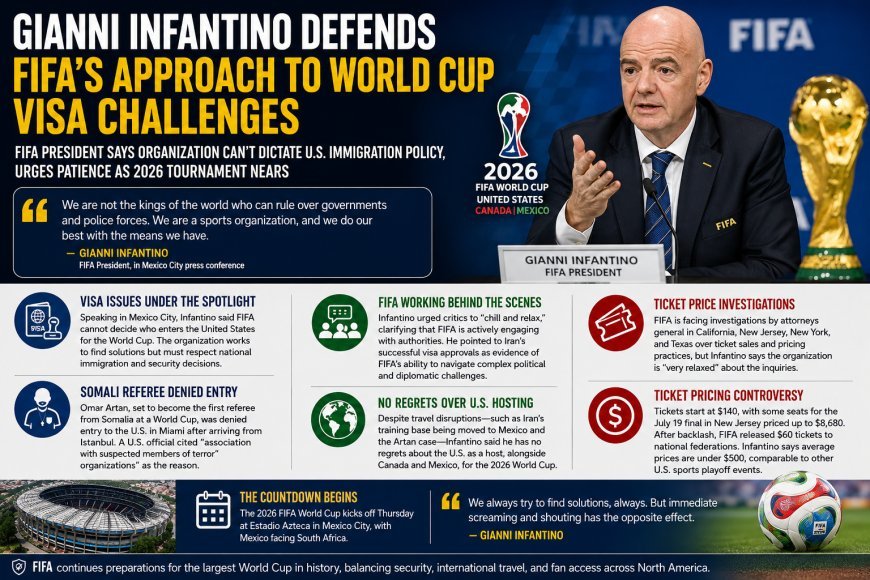
Speaking during a pre-World Cup press conference in Mexico City, Infantino stressed that while FIFA actively works to resolve entry and travel issues, the organization does not possess the authority to override the immigration policies or security decisions of sovereign governments.
According to Infantino, FIFA's role is to facilitate solutions wherever possible, but ultimate decisions regarding visas and border entry remain in the hands of national authorities.
“We always try to find solutions,” Infantino said. “But we must recognize that FIFA is a sports organization. We cannot dictate decisions to governments, border agencies, or law enforcement authorities.”
Omar Artan Case Highlights Ongoing Visa Challenges
One of the most prominent controversies involves Omar Artan, who was expected to become the first Somali referee to officiate at a FIFA World Cup after earning a place on the tournament's final officials list.
However, Artan was reportedly denied entry into the United States after arriving at Miami International Airport from Istanbul.
A U.S. official stated that the decision was linked to alleged associations with individuals suspected of involvement in terrorist organizations.
The incident has drawn international attention and renewed debate about how immigration and security policies can affect major global sporting events.
Infantino acknowledged the disappointment surrounding the situation but maintained that FIFA remains committed to pursuing solutions through dialogue and cooperation.
He suggested that immediate public confrontation is not always the most effective path toward resolving complex diplomatic and administrative matters.
FIFA Working Behind the Scenes on Travel Issues
After receiving criticism for his comments urging observers to “relax,” Infantino later clarified that he was not advocating inaction.
Instead, he explained that FIFA is actively engaged in discussions with relevant authorities and stakeholders behind the scenes.
According to the FIFA president, many conversations surrounding visa approvals, security concerns, and international travel restrictions occur privately and require careful negotiation.
Infantino pointed to FIFA’s efforts in securing travel arrangements for Iran’s national team despite broader political tensions between Iran and the United States.
The successful participation of the Iranian squad, he argued, demonstrates FIFA’s ability to navigate complex geopolitical challenges when working collaboratively with governments and football associations.
“We continue trying to understand situations, gather information, and find positive outcomes whenever possible,” he said.
No Regrets Over Selecting the United States as Host
Despite the visa-related controversies, Infantino made it clear that he does not regret FIFA’s decision to award hosting responsibilities to the United States, which is co-hosting the tournament alongside Canada and Mexico.
The preparations for the tournament have encountered several logistical hurdles, including adjustments to Iran’s training arrangements and concerns regarding travel access for certain participants.
Nevertheless, Infantino expressed confidence in the host nations and reiterated that challenges of this nature are not unusual when organizing an event of such global scale.
The 2026 World Cup is expected to be the largest edition in FIFA history, bringing together millions of fans and participants from around the world.
FIFA Responds to Ticket Pricing Investigations
In addition to visa concerns, FIFA is also facing scrutiny over World Cup ticket pricing.
Attorneys general in California, New Jersey, New York, and Texas have opened investigations related to ticket sales practices for the tournament.
Infantino, however, insisted that FIFA remains unconcerned about the ongoing inquiries.
According to him, the organization consulted extensively with legal experts and industry specialists before launching ticket sales, ensuring compliance with applicable regulations.
FIFA reported selling approximately 800,000 tickets for matches scheduled in Los Angeles and San Francisco. Infantino noted that only a handful of customer complaints had been received and said those concerns were addressed before official investigations began.
“We welcome any review of our practices,” he said. “We are prepared to present all relevant information and explain our position.”
Debate Continues Over World Cup Ticket Prices
Ticket pricing has emerged as a major talking point among supporters.
Standard tickets for the tournament were initially listed from approximately $140, while some seats for the July 19 final in New Jersey reached prices as high as $8,680.
Following criticism from fans and consumer advocates, FIFA later released a limited number of lower-cost tickets, including $60 allocations distributed through national football federations.
Infantino defended the overall pricing structure, stating that the average ticket cost remained below $500 and was broadly comparable to major U.S. sporting events during playoff seasons.
However, observers have noted that such comparisons may align more closely with secondary-market resale prices than with original face-value ticket prices.
World Cup Countdown Begins
As attention intensifies around visa access, ticket affordability, and tournament logistics, FIFA continues final preparations for the opening of the 2026 FIFA World Cup.
The competition, jointly hosted by the United States, Canada, and Mexico, is scheduled to begin at the iconic Estadio Azteca in Mexico City, where Mexico will face South Africa in the tournament opener.
With millions of supporters expected to travel across North America, FIFA faces the challenge of balancing security requirements, international mobility, and fan accessibility while delivering one of the most ambitious sporting events ever staged.
Conclusion
Gianni Infantino's comments underscore the delicate balance FIFA must maintain between organizing a global sporting spectacle and respecting national immigration and security policies. As the 2026 World Cup approaches, visa disputes, referee eligibility concerns, and ticket pricing debates remain under close scrutiny. FIFA insists it is actively working to resolve challenges behind the scenes, but the coming weeks will reveal how effectively the organization can navigate the complex realities of hosting the world's largest football tournament.