
Trump National Parks History Order Sparks Backlash as Thousands of Visitors Defend Historical Accuracy
Trump’s national parks history initiative drew widespread criticism as visitors defended historical accuracy and opposed efforts to alter public exhibits.
 A.S
A.S
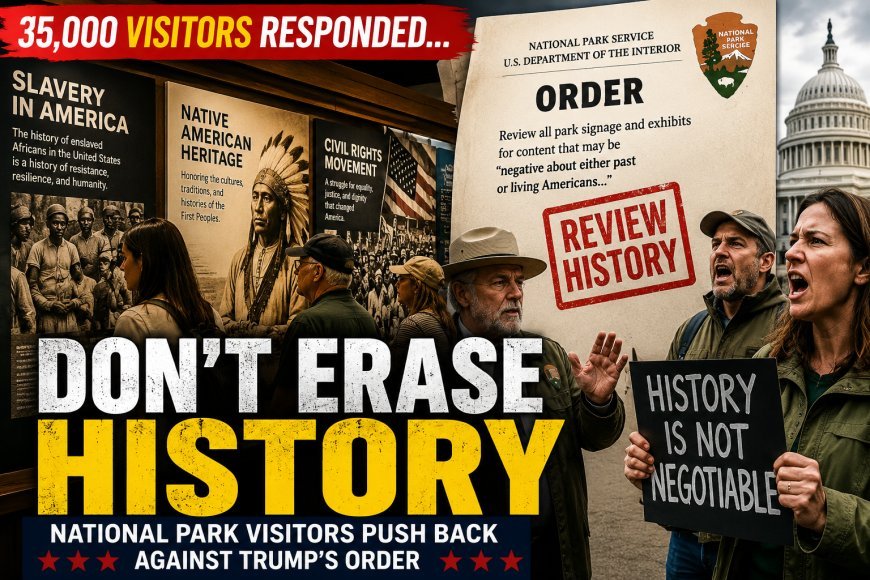
Trump Administration’s National Parks History Initiative Faces Public Pushback
Thousands of Visitors Reject Call to Report “Negative” Historical Content
A Trump administration initiative encouraging visitors to U.S. national parks to report exhibits perceived as portraying Americans negatively generated an unexpected response: widespread criticism of the program itself.
An analysis of approximately 35,000 public comments submitted between June 2025 and January 2026 reveals that many participants used the opportunity not to identify problematic displays, but to express concern over what they viewed as an effort to reshape or minimize difficult chapters of American history.
The comments, which became public through litigation, offer a rare glimpse into how visitors reacted to a federal campaign aimed at revising historical interpretation across national park sites.
The Policy Behind the Controversy
The initiative stemmed from directives issued by the Trump administration that sought to highlight what officials described as the nation’s achievements, progress, and natural beauty.
Interior Secretary Doug Burgum instructed the National Park Service to review exhibits, signs, and interpretive materials for what the administration characterized as “inappropriate content.” The guidance specifically targeted materials considered overly negative toward Americans, whether historical or contemporary, and encouraged a greater emphasis on the country’s accomplishments and landscapes.
The policy followed President Donald Trump’s broader executive effort focused on what the administration called restoring “truth and sanity” to the presentation of American history.
According to Burgum, the objective was to ensure national parks served as inspiring public spaces that celebrate the nation’s heritage, democratic progress, and contributions to liberty and prosperity.
Public Response Largely Critical
While the administration hoped visitors would identify exhibits requiring revision, a significant portion of respondents instead challenged the premise of the initiative.
Many comments accused officials of attempting to rewrite history or discourage honest discussions about the nation's past.
Visitors from parks across the country argued that understanding difficult subjects—including slavery, discrimination, and social conflict—is essential to accurately portraying American history.
Several commenters praised existing exhibits for presenting a balanced and educational account of historical events, emphasizing that confronting uncomfortable truths can help future generations better understand the country's development.
One visitor noted that learning about both the achievements and hardships of the American experience made their visit more meaningful and educational.
Concerns Over Historical Revisionism
The debate intensified as advocacy groups began documenting changes to historical signage and exhibits throughout the national park system.
A coalition of librarians, historians, and public-interest researchers operating under the name Save Our Signs has tracked dozens of modifications and removals at park sites nationwide.
According to the group, at least 59 interpretive signs or exhibits have been altered, removed, or revised.
Many of the affected displays addressed topics such as:
Slavery and Enslaved Communities
Several exhibits discussing enslaved individuals and their experiences reportedly faced revisions. Particular attention focused on displays at Philadelphia’s Independence National Historical Park that explored the lives of enslaved people connected to the household of George Washington during the 1790s.
Some materials were temporarily restored following a court order before additional changes were paused pending legal proceedings.
Native American History
Advocates have also reported modifications affecting exhibits that discuss Indigenous communities, tribal history, and the historical impact of federal policies on Native American populations.
Climate Change and Conservation
Interpretive materials addressing environmental issues, conservation efforts, and climate-related topics have similarly been identified among the exhibits affected by recent changes.
Women’s Contributions to American History
According to researchers monitoring the revisions, some exhibits highlighting the role of women in conservation and public life have also undergone updates or removal.
Supporters Flag Exhibits They Viewed as Politicized
Not all comments opposed the administration’s initiative.
Some visitors used the reporting process to identify exhibits they believed contained modern political interpretations of historical figures.
Examples included complaints about displays discussing race, diversity initiatives, and social justice concepts in relation to historical leaders.
Critics of those exhibits argued that some interpretive materials applied contemporary political frameworks to historical figures in ways they considered misleading or historically inaccurate.
These submissions reflected broader national debates surrounding diversity, equity, inclusion programs, and how historical legacies should be interpreted in public institutions.
Limited Participation Despite Massive Park Attendance
Although the issue attracted national attention, participation represented only a small fraction of overall park visitors.
The National Park Service recorded approximately 323 million visits across more than 400 sites during the year. Against that backdrop, the roughly 35,000 comments submitted through the program amounted to a relatively modest response rate.
Even so, the comments provide valuable insight into public attitudes toward historical interpretation and the role of federal agencies in shaping historical narratives.
Administration Provides Few Details on Changes
The Interior Department has offered limited information regarding how many exhibits were modified as a direct result of visitor submissions.
Officials have stated that many materials flagged by commenters remain unchanged but have provided few specifics regarding ongoing reviews or future revisions.
Meanwhile, reports from advocacy organizations indicate that changes have occurred at several notable locations, including parks and historic sites in Maine, Wyoming, New York, Pennsylvania, and the U.S. Virgin Islands.
A Growing National Debate Over History and Memory
The controversy surrounding national park exhibits reflects a larger national conversation about how history should be presented in public spaces.
Supporters of the administration’s approach argue that historical interpretation should place greater emphasis on national achievements and shared accomplishments. Critics counter that removing or minimizing difficult historical realities risks creating an incomplete and misleading account of the American experience.
As legal challenges, public scrutiny, and historical reviews continue, national parks have become an increasingly visible battleground in the debate over how Americans remember, interpret, and learn from their past.
Conclusion
The Trump administration’s effort to identify and revise allegedly “negative” historical content in national parks generated significant public resistance, with many visitors defending the importance of preserving a complete and honest account of American history. The controversy highlights an ongoing national struggle over historical interpretation, public memory, and the role government institutions play in shaping how future generations understand the past.