Trump’s Inflation Challenge Deepens as Rising Costs Threaten GOP Prospects Ahead of Midterms
Trump faces growing political pressure as inflation surges, energy costs rise, and voters question the administration’s plan to lower living expenses.
 A.S
A.S
Trump’s Economic Message Faces New Test as Inflation Accelerates
Rising Costs Undermine a Key Political Strength
President Donald Trump returned to the White House promising to restore economic confidence and ease the financial pressures facing American families. Yet as inflation reaches its highest level in three years, that promise is becoming increasingly difficult to defend.
A combination of geopolitical instability, elevated energy prices, and broader inflationary pressures has created fresh economic challenges for the administration. While the White House argues that current price increases are temporary and linked to disruptions caused by the conflict with Iran, many voters are experiencing immediate financial strain.
Political strategists and economic observers warn that public perceptions may already be hardening, making it increasingly difficult for the administration to regain control of the economic narrative before the 2026 midterm elections.
Inflation Reaches a New High
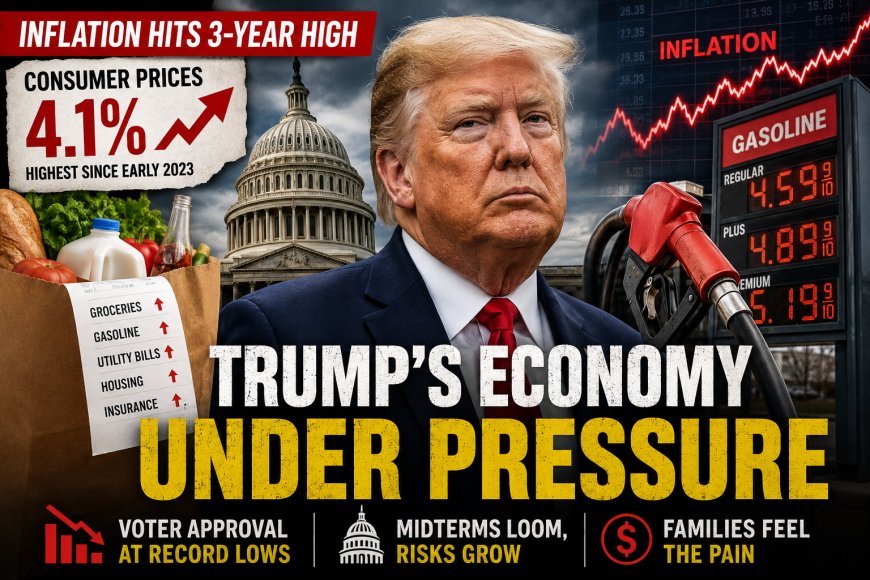
Recent government data showed inflation climbing above 4 percent for the first time since early 2023, marking a significant setback for an administration that has consistently emphasized affordability.
The conflict involving Iran has emerged as a major driver of recent price increases, particularly in energy markets. Although gasoline prices have eased modestly in recent weeks, analysts say consumers are unlikely to see a return to pre-conflict fuel costs in the near future.
At the same time, households continue to face higher expenses across several categories, including:
Food Prices
Grocery costs remain elevated, adding pressure to household budgets already stretched by inflation.
Utility Bills
Consumers are paying more for electricity and other essential services, reducing disposable income and increasing financial stress.
Housing Costs
Higher borrowing costs and persistent inflation continue to affect mortgage rates and housing affordability.
Healthcare Expenses
Medical costs remain a concern for many Americans, particularly working families and retirees living on fixed incomes.
Trump Allies Fear Public Opinion Has Shifted
Some current and former Trump allies privately acknowledge that economic perceptions may have already become entrenched.
According to Republican strategists, voters tend to judge economic conditions based on personal experiences rather than broader policy arguments. Once households begin feeling sustained financial pressure, changing those perceptions can become difficult.
One former administration official described the situation as politically challenging, arguing that public opinion regarding the economy may already be largely formed regardless of whether inflation eventually moderates.
White House Focuses on Long-Term Economic Recovery
Administration officials maintain that the current inflation spike is closely tied to disruptions in global energy markets and that conditions will improve once stability returns to the Middle East.
The White House has repeatedly emphasized that restoring normal shipping and energy flows through the Strait of Hormuz remains central to reducing inflationary pressure.
Officials also point to policies they say have lowered prescription drug costs and reduced tax burdens for many Americans. However, the administration has comparatively fewer tools available to directly influence gasoline prices.
Efforts such as releasing strategic petroleum reserves and easing certain energy-related sanctions have provided limited relief, while proposals such as a temporary gas tax holiday have failed to gain traction.
Polls Show Weak Approval on Cost-of-Living Issues
Economic concerns continue to dominate voter priorities.
A recent Reuters/Ipsos survey found that fewer than one-quarter of Americans approve of the president’s handling of cost-of-living issues, highlighting the political risks facing Republicans as election season approaches.
The findings suggest that while voters may support certain aspects of the administration’s agenda, inflation remains a major source of dissatisfaction.
Pennsylvania Senator Dave McCormick echoed those concerns during a recent policy forum, acknowledging that many Americans continue to feel pressure from rising costs across multiple sectors of the economy.
Federal Reserve Faces Growing Pressure
The inflation surge is also influencing expectations on Wall Street.
Financial markets increasingly believe the Federal Reserve may raise interest rates before the end of the year in an effort to contain inflation.
Higher rates could have significant consequences for consumers, including:
More expensive mortgages
Higher credit card interest rates
Increased auto loan costs
Reduced business investment
Bond markets are already signaling concern, with yields on long-term government debt climbing as investors adjust expectations for future inflation.
Energy Markets Remain a Critical Risk
Economists continue to identify energy costs as the primary contributor to the latest inflation increase.
The ongoing conflict involving Iran has disrupted global oil markets and raised concerns about supply shortages. Analysts warn that even a partial reopening of key shipping routes may not immediately resolve the imbalance between supply and demand.
According to energy market researchers, the world has already lost significant oil supply due to disruptions in the region. Replacing that production could take months, keeping prices elevated and prolonging inflationary pressures.
Further escalation of military tensions could place additional strain on global energy infrastructure and drive oil prices even higher.
Inflation’s Impact on Workers and Families
One of the most concerning developments for economists is the effect inflation is having on real wages.
When prices rise faster than earnings, purchasing power declines, leaving households with less ability to afford goods and services.
Economic analysts warn that continued erosion of consumer purchasing power could become a major political issue as Republicans attempt to persuade voters that economic conditions are improving.
For many families, the debate is not about economic forecasts or geopolitical strategy—it is about whether paychecks can keep pace with everyday expenses.
Can the Administration Reverse the Trend?
The White House remains optimistic that inflation will moderate if geopolitical tensions ease and energy markets stabilize.
However, economists note that inflationary pressures now extend beyond oil prices alone. Massive investments in artificial intelligence infrastructure, data centers, and other large-scale projects are increasing demand across the economy. At the same time, concerns over potential new tariffs are contributing to uncertainty among businesses and investors.
These factors suggest that inflation may prove more persistent than policymakers hope.
Conclusion
President Trump’s economic agenda is facing one of its toughest tests as inflation rises and voters feel the impact of higher living costs. While the administration argues that current pressures are temporary and largely driven by geopolitical disruptions, public frustration over affordability continues to grow. With the midterm elections approaching, the ability to control inflation and restore consumer confidence may become one of the defining challenges of Trump’s second term.